
Tai Chi: A Graceful Path to Inner Calm and Everyday Vitality
To practice Tai Chi, you don’t need to be spiritual. You don’t need to be that flexible. You simply need to be mindfully curious.
So, what is Tai Chi, really?
In the heart of ancient China, thousands of years ago, Tai Chi was born. With deep roots in Chinese philosophy, medicine, and martial arts, it carries a quiet, flowing language of the body. At times, it was even considered an esoteric technique, one that mastered external combat through internal harmony.
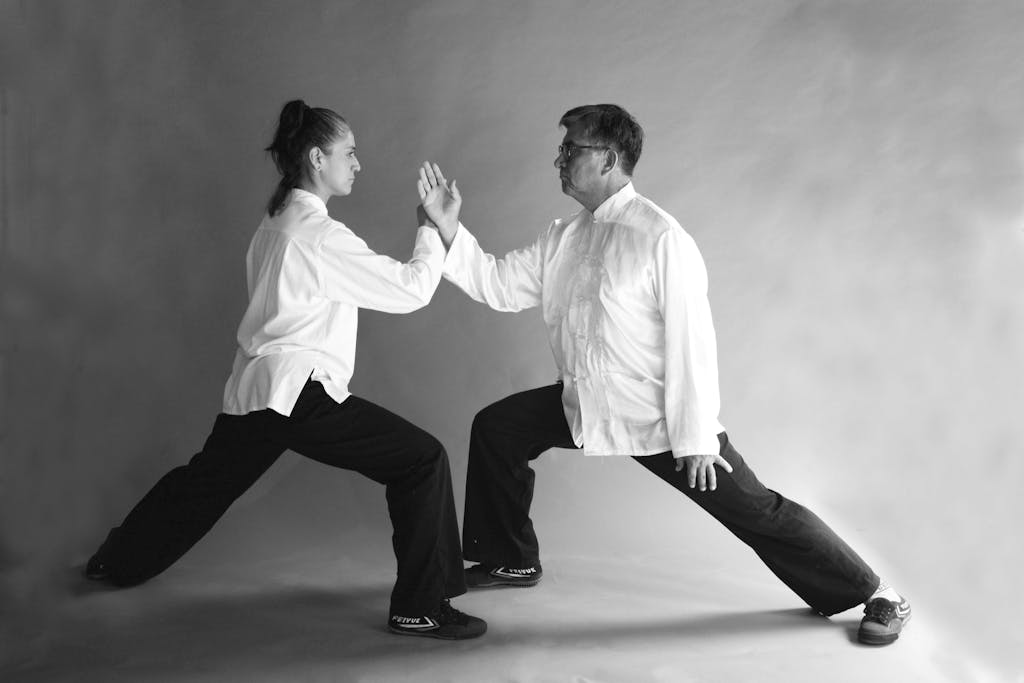
Over the years, Tai Chi evolved through different schools and styles, transforming from the traditional art of self-defence (Tai Ji Quan) into a more mindful practice that supports physical and mental well-being.
Interestingly, even today, long-time enthusiasts debate whether Tai Chi can still be considered a martial art, as many of its movements retain the wisdom of combat forms. Yet in modern times, Tai Chi continues to merge breath, movement, and presence. Often called meditation in motion, it invites us to slow down, not to stop, but to move with intention, for healing and centering, one graceful step at a time.
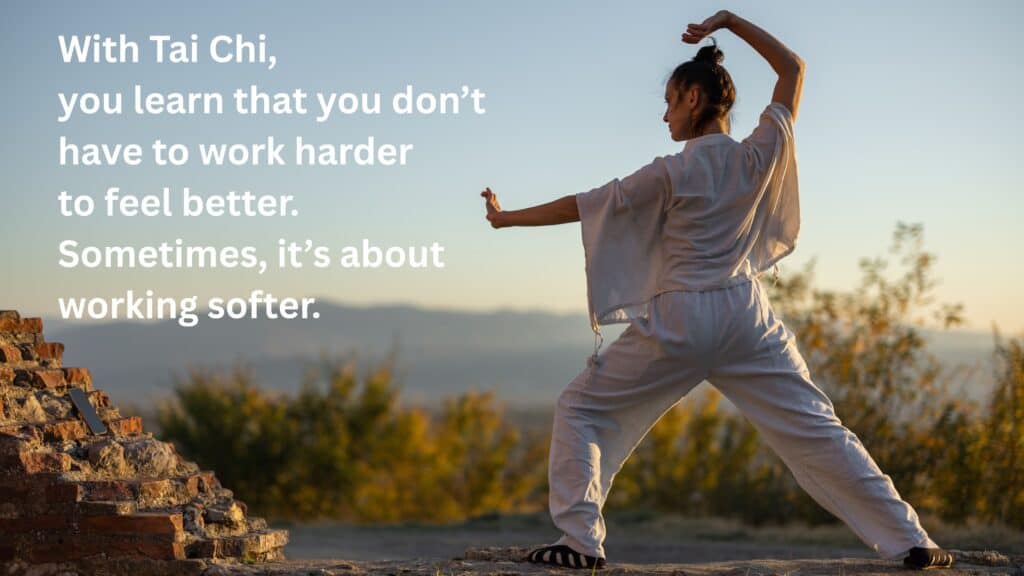
Physical Benefits: A Body That Listens and Learns
Balance, Strength & Cardiovascular Support
Tai Chi supports the heart, not with adrenaline, but with steady grace. It improves circulation, lowers blood pressure, and gently builds muscular strength without strain or force.
Its deliberate, flowing movements strengthen balance and flexibility, which is especially helpful for those navigating stiffness, aging, or simply the demands of modern, sedentary life. As your body becomes more fluid, your movements feel safer, lighter, and more confident.
Mental & Emotional Benefits: A Mind That Softens and Clears
With every inhale and exhale, every slow gesture, it gives the mind time to catch up with the body. A subtle practice of letting go. It activates feel-good hormones like endorphins, enhancing mood and clarity without forcing stillness. Regular practice helps regulate the nervous system, unwind mental tension, and return us to a quieter place within.
It may not fix the outside world, but it helps us meet it with steadier hands and a gentler heart.
A Moving Mindfulness Practice
Mindfulness doesn’t always arrive in silence. Sometimes, it reveals itself through motion.
Tai Chi invites us to focus not on doing more, but on being more present. As you move through its elegant forms, you begin to notice your breath, your posture, your thoughts. It becomes a moment to moment awareness, a quiet ritual of returning to yourself.
Through repetition and breath, you reconnect with your internal compass. Whether or not you consider yourself “spiritual,” you may begin to sense something deeper guiding your steps, call it intuition, energy, or simply peace.
Tai Chi bridges the body and mind, the inner and outer worlds.
Beginning Your Tai Chi Journey
While gentle movements can be practiced at home, if you’re new to Tai Chi, it’s ideal to learn with a teacher. The practice focuses on precise movements and postures, and depending on your body and needs, certain techniques may help or hinder your progress.
Start small. Read, observe, explore. And if you can find a class nearby, even better, it offers a supportive, communal way to experience the basics of this mindful art.
In Closing: A Whispered Invitation
As I write this, I wonder…
With so many of us wired for stress, can we learn to live in rhythm with balance, relaxation, and deep connection, just as Tai Chi evolved from outer defense to inner mastery?
Tai Chi offers a path not just to wellness, but to wholeness.
A quiet revolution, not loud, not rushed.
Just the gentle unfolding of balance, strength, and self-awareness.
So…
What if your next step was slower, but more powerful?
What if you gave yourself permission to move differently, to listen deeply?
One graceful movement at a time… let yourself begin.