How Art Brings Mindfulness Into Your Daily Life
Inspiration, creativity, and self-expression are all innate abilities in each and every one of us. And art, the so-called art, does not belong only to the trained professional or the naturally gifted.
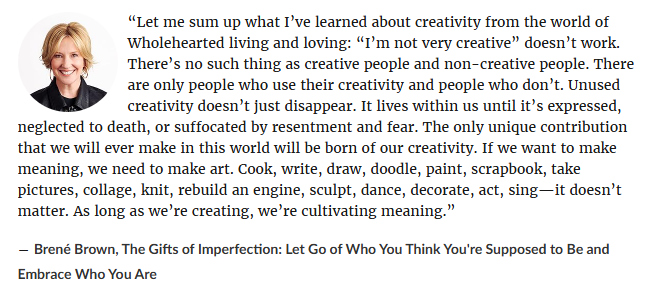
Art in all its expressions belongs to all of us. Brené Brown echoes this in The Gifts of Imperfection, reminding us that unused creativity doesn’t just disappear; it turns into grief. We are wired to make things. And art, even in its smallest form, is one of the most honest ways back to us.
The magic lamp…or the Lamp that changed everything. For me.
I want to tell you about a Turkish lamp.
A while back, I went to a workshop to make one as part of a birthday celebration. The kind where you sit with beads and colors and patterns, and you decorate this beautiful frame with your own hands. It sounds lovely, right? And it was, but not at first.
At first, I looked around the room at everyone else’s lamps and felt a familiar heaviness settling in. Mine didn’t look as polished. As stylish. I wasn’t an artist. I had never really done crafts before.
Honestly, I had spent most of my life thinking that only “others in my family” were the creative ones, the artistic ones. On top, I had never made the time, nor have I had the patience for things that took this long just for the sake of enjoyment. What was the point of sitting here, bead by bead, if the result wasn’t going to be “good”?

And then something shifted.
I looked at my lamp, really looked at it, and I saw myself in it. My patterns. My colors. My way of placing things, slightly imperfect, slightly unexpected, completely my own. It wasn’t a lesser lamp. It was my lamp. My voice made visible.
That’s the moment Brené Brown’s words landed in my body, not just my head. In The Gifts of Imperfection, she writes about embracing who we are rather than who we think we should be. That workshop was the first time I truly understood what that meant through making something with my hands. The imperfection wasn’t the problem. The imperfection was the point. It was proof I had been there, fully, as myself.
Your senses are the doorway
In this journey of discovery, I am always looking for ways to be mindful and connect everyday life to mindfulness practices and what our senses can add to this life experience.
And mindfulness certainly often begins with the senses, and art gives your senses a job. You notice the drag of a pencil, the smell of paint, the grain of paper, the soil in your fingers when working in your garden. Because your hands are busy, your mind has one clear place to land.
That sensory focus can quiet mental clutter because it replaces swirl with detail. Instead of replaying the hours of the day that already passed, or worrying about a future not yet defined. You are there. Just in the present. Noticing a shape, a shade, or a movement.
Even five minutes of doodling can pull you out of your head and back into your body. And you don’t need skill for this to work. A page of circles or blocks of color holds your attention just as well as a finished painting.
This made me think of Mandala coloring. The circular pattern gives you a clear boundary, and the repeated shapes create rhythm. Because the structure is already there, you can focus on color and motion instead of worrying about what to draw, you are just going with the flow.
Flow is a gift you can give yourself
Flow is the feeling of being fully absorbed in what you’re doing. Time passes, but you stop checking it. For many people, art opens that door more easily than formal meditation. There’s something concrete to focus on, a next stroke, a next tune, a next bead, or the next ingredient if you are enjoying preparing a meal.
You don’t need an entire afternoon. A short session after work or before bed can shift your attention long enough to reset your mood. When your hands have something truthful to do, your mind often softens.
For beginners, a blank page can bring pressure. A mandala lowers that pressure. You choose one section, then another, and your attention keeps returning to the same steady loop. That rhythm can reduce decision fatigue and help you stay in the moment longer.
Art holds what words can’t; it teaches acceptance
Paint drips. Lines wobble. Plants get dry. Something you planned to be a certain way turns out different, or needs your attention.
In those moments, you get to practice the very thing mindfulness asks of us: staying present with what is there, not what you wish for. If you learn to tolerate a smudge on paper, you may find it a little easier to tolerate an imperfect mood, a messy hour, an unfinished day.
You might paint anger with thick red strokes. On another day, the same red appears in a beautiful cardinal stopping by your garden ad you then appreciate both. You see beauty and art in both expressions of creation.
Final words…
That lamp reminded me of what Brené Brown has been saying all along: creativity is not a talent you either have or don’t. It is a practice. A returning. A willingness to show up and make something true, even if it’s wobbly, even if no one else would call it beautiful.
Art doesn’t ask you to be talented. It asks you to show up. That is enough. That has always been enough. Because you are ART!